Hay Testing
Unlock the Power of Your Forage
Hay testing analyzes the nutrient composition of your forage, including protein, energy, fiber, and mineral content. Understanding these values is essential to crafting balanced rations for your livestock.
When paired with supplements like VitaFerm, hay testing becomes a powerful tool for identifying and filling nutritional gaps, ensuring your cattle receive the precise nutrients they need to thrive.
Hay testing analyzes the nutrient composition of your forage, including protein, energy, fiber, and mineral content. Understanding these values is essential to crafting balanced rations for your livestock.
When paired with supplements like VitaFerm, hay testing becomes a powerful tool for identifying and filling nutritional gaps, ensuring your cattle receive the precise nutrients they need to thrive.
Hay testing analyzes the nutrient composition of your forage, including protein, energy, fiber, and mineral content. Understanding these values is essential to crafting balanced rations for your livestock.
When paired with supplements like VitaFerm, hay testing becomes a powerful tool for identifying and filling nutritional gaps, ensuring your cattle receive the precise nutrients they need to thrive.
Simple Steps To Smarter Nutrition
Collect Your Sample
To collect a representative hay sample, choose random bales from the lot and pull material from deep inside each one—using a hay probe when possible or prying the bale open by hand to grab several small handfuls without stripping leaves. Combine all samples in a 5-gallon bucket until you’ve collected from about 10% of the bales, then break apart and mix the hay thoroughly. Place roughly half a quart of the mixed material into a resealable bag, remove excess air, and it’s ready to send to the lab.
Send It in for analysis
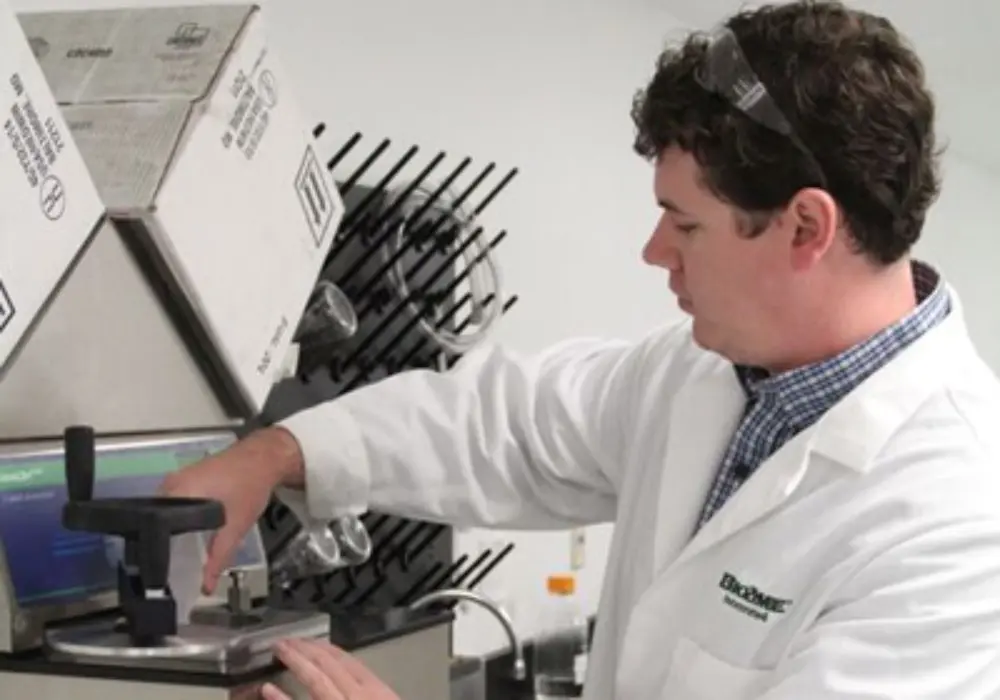
After you’ve collected your composite hay sample, your dealer will help you submit it to Dairyland Laboratories for analysis. When testing is complete, results are emailed to you, your dealer, and your ASM so everyone has the forage information needed for the next steps.
Receive Your Results
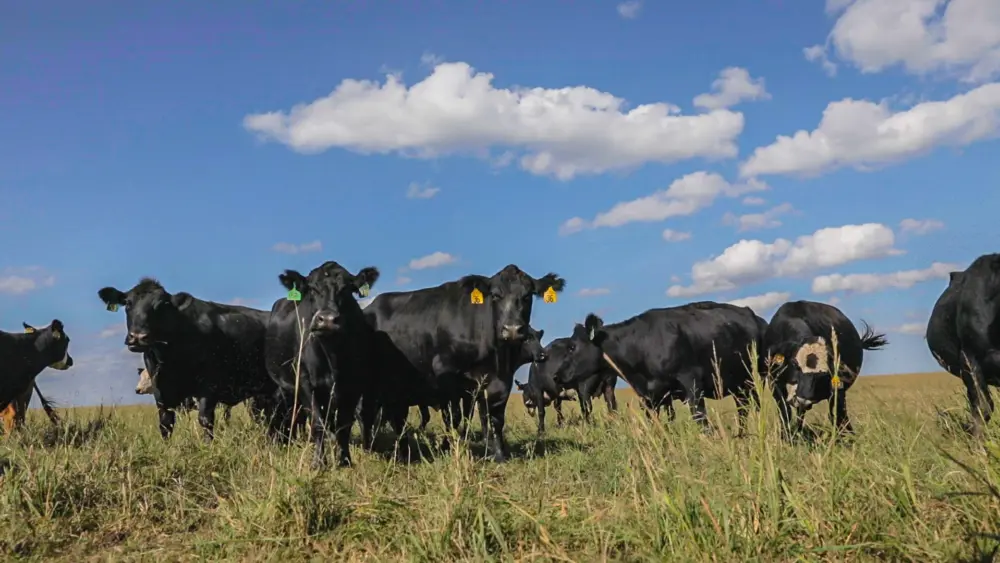
Once your sample reaches the lab, it will be analyzed to generate a detailed breakdown of your hay’s nutrient profile. This includes key values like protein, energy, fiber, and mineral content—information that reflects the true feeding value of the forage you’ll be relying on. The report gives you a clear snapshot of both the strengths and any potential gaps in your hay, allowing you to understand exactly what your animals are consuming.
Get Customized Recommendations
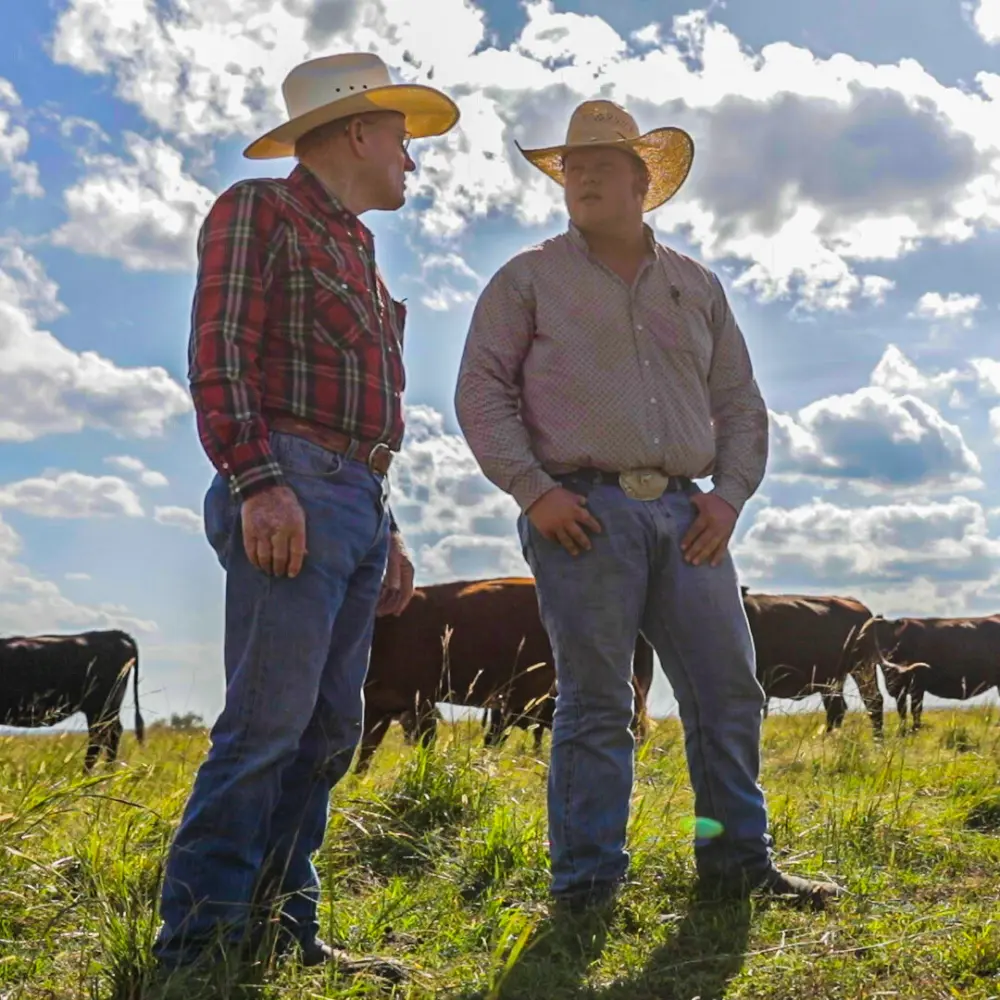
Once your hay has been tested, BioZyme’s nutritionists review the results and help you understand exactly what your forage provides. Using your hay’s protein, energy, and mineral profile, they can offer complementary ration balancing and suggest practical adjustments or supplements based on your goals. Just contact your ASM to get started.
Collect Your Sample
To collect a representative hay sample, choose random bales from the lot and pull material from deep inside each one—using a hay probe when possible or prying the bale open by hand to grab several small handfuls without stripping leaves. Combine all samples in a 5-gallon bucket until you’ve collected from about 10% of the bales, then break apart and mix the hay thoroughly. Place roughly half a quart of the mixed material into a resealable bag, remove excess air, and it’s ready to send to the lab.
Send It in for analysis
After you’ve collected your composite hay sample, your dealer will help you submit it to Dairyland Laboratories for analysis. When testing is complete, results are emailed to you, your dealer, and your ASM so everyone has the forage information needed for the next steps.
Receive Your Results
Once your sample reaches the lab, it will be analyzed to generate a detailed breakdown of your hay’s nutrient profile. This includes key values like protein, energy, fiber, and mineral content—information that reflects the true feeding value of the forage you’ll be relying on. The report gives you a clear snapshot of both the strengths and any potential gaps in your hay, allowing you to understand exactly what your animals are consuming.
Get Customized Recommendations
Once your hay has been tested, BioZyme’s nutritionists review the results and help you understand exactly what your forage provides. Using your hay’s protein, energy, and mineral profile, they can offer complementary ration balancing and suggest practical adjustments or supplements based on your goals. Just contact your ASM to get started.
Unlock the potential of your forage with BioZyme’s hay testing. Achieve healthier, more productive cattle while cutting unnecessary feed costs. Reach out below!
Frequent Asked Questions
To obtain a complete nutrient analysis, customers planning to use BioZyme products in their ration can contact their local dealer about hay testing. Dairyland Laboratories, Inc., completes lab analysis and results will be emailed to the producer, dealer and ASM.
The next step in ensuring your nutritional program will help you maximize animal performance is working with your local dealer and/or ASM. They will submit your results to the nutritionists at BioZyme®. Our nutrition team can provide assistance in ration formulation based on your production scenario to help you better achieve your performance expectations.
Select random bales throughout the lot you wish to sample. You’ll want to obtain a sample from as far inside the bale as possible.
Sampling with hay probe: Reach as far as possible inside the bale with your coring tool. This can be more difficult when bales are wet or when the hay is very mature. In those cases, a spare battery for the drill is helpful especially if a large number of bales are to be probed.
Sampling hay by hand: It helps to use the short pipe to pry open the bale. The goal is to reach inside with your hand open and grasp tightly a handful of hay material. You want to try to not strip the leaves off when you do the grabbing, so many small handfuls are better than one large handful.
Place sample from bale into a 5 gallon bucket.
Repeat steps 2 and 3 until you have at least 10 samples from 10% of the bales in the lot you are testing. All samples will be placed into the same 5 gallon bucket.
After sampling the desired number of bales, the entire sample should be pulled apart and mixed thoroughly. You cannot rely on the lab to mix your sample.
Dump sample into re-sealable plastic bag and remove any excess air. It is fine if the bag is not completely full, but you will need approximately 1/2 a quart of material in the bag
The tools needed for samples collected with a hay probe are a cordless drill, hay probe, permanent marker, a 1 gallon resealable plastic bag and a clean 5 gallon bucket. If taking hand grab samples, you will only need a permanent marker, a 1 gallon resealable plastic bag and a 5 gallon bucket.